Filling up with fuel is simple, but charging an electric car (EV) requires a bit more thought and planning. While different connectors and apps can seem complex, this guide aims to simplify the process and free you from the “tangled mess” of charging cables.
Charging at home
Charging at home is the most convenient and typically the cheapest way to keep your vehicle topped up. It is often compared to having your very own petrol station at your front door.

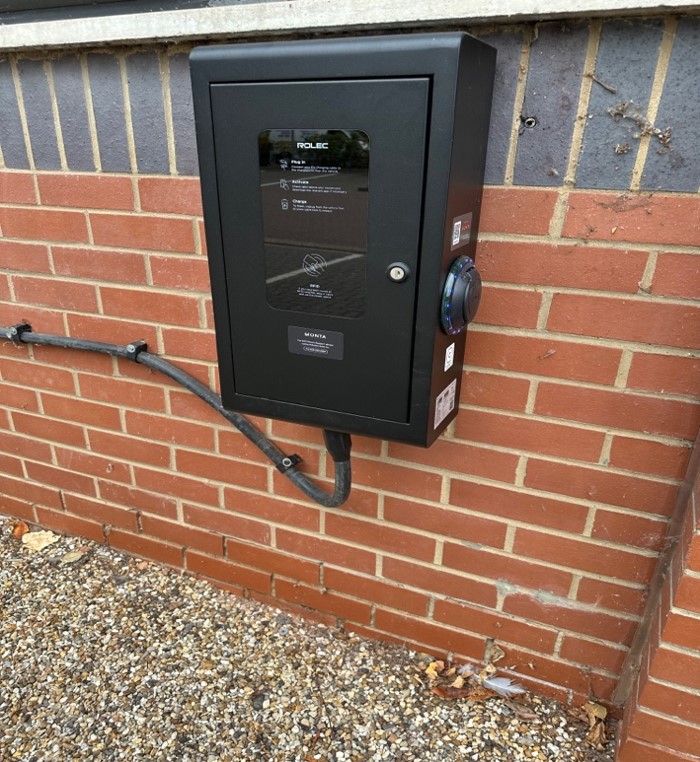
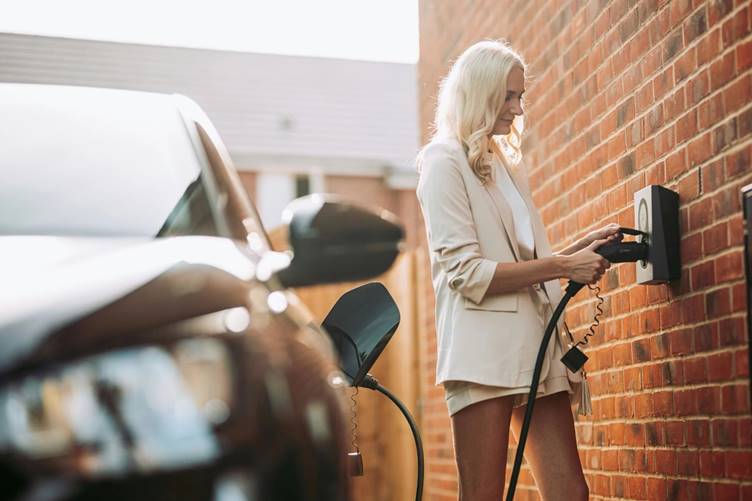
A modern home EV charger mounted on an external brick wall next to a parked car.
EV charger types and cables
Home chargers come in two main styles:
Power and Speed
The speed of your charge depends on your home’s power supply:
While a domestic socket works, a dedicated home charger is roughly three times faster. Most UK homes use single-phase power; upgrading to three-phase for faster 22kW charging can be costly.
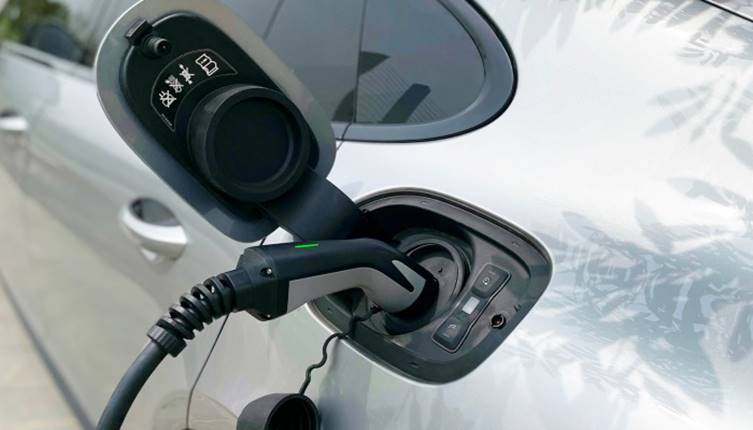
Ensure your EV charging cable, whether tethered or untethered, is long enough to reach your vehicle without dragging on the ground. If purchasing a separate cable for an untethered charger, confirm it supports your home charger’s maximum charging speed, which is typically indicated on the side of the cable.
Permissions and Costs
To install a home charger, your home must be a permanent structure. While driveways are ideal, solutions exist for those with off-street or on-street parking, though you should consult your local council for approval in on-street scenarios.
If you live in a rented property, you must obtain written permission from your landlord before installation. All owners must also get approval from their local Distribution Network Operator (DNO), a process usually handled by the installer. A typical installation costs between £800 and £1,200.
Public and workplace charging
While home charging is the “foundation,” public and workplace infrastructure support longer journeys and commuters.
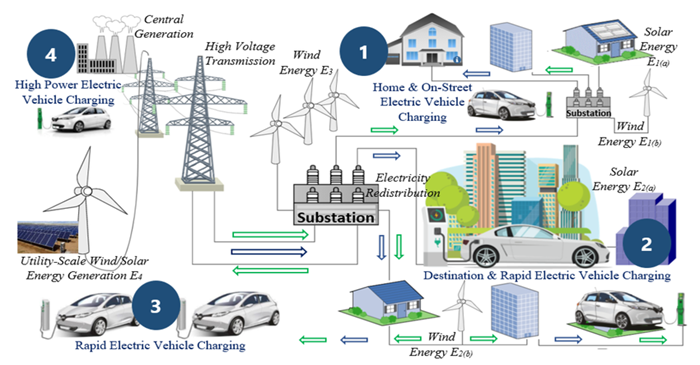
Illustrating EV Charging Locations Across the Electricity Supply Network
EV charge connectors
While there is no single universal connector yet, the industry has largely standardised for modern vehicles.
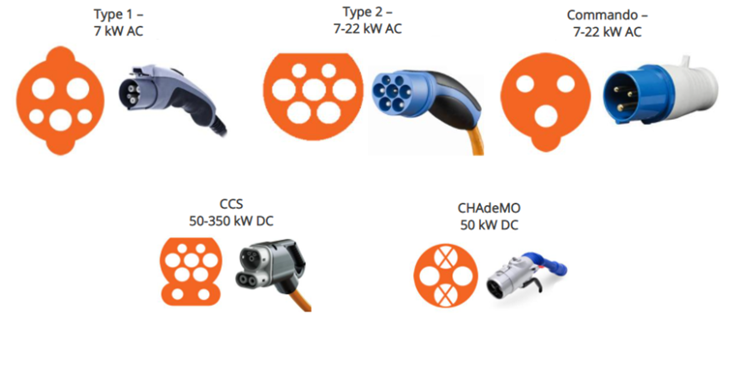
A side-by-side comparison showing the visual differences the different types of chargers
Maximizing range and battery health
Most modern EVs offer a range of 150 to 350 miles. To get the most out of your battery and ensure its longevity, consider these habits:
How much does it cost to charge an EV at home?
Charging an electric vehicle (EV) at home is generally the most cost-effective way to stay powered up. On average, a full charge can cost between £4 and £20, though this depends heavily on your vehicle’s battery size, your specific energy tariff, and when you charge (peak vs off-peak hours)
In the UK, the average electricity price is around 27p per kWh. Based on this rate, fully charging a typical EV with a 60kWh battery would cost approximately £16–£18.
Many energy providers offer EV tariffs with significantly cheaper overnight electricity rates. Some tariffs drop to around 7p per kWh during off-peak hours. With one of these tariffs, charging the same 60kWh battery could cost as little as £4–£5 per full charge.
Cost Per Mile
When charging at home, EV drivers typically spend:
In comparison, a petrol car often costs 17–20p per mile in fuel. This means EV drivers charging at home can save over £1,000 per year compared to running a petrol vehicle.
Electric car charging points
Most electric vehicles also feature built-in navigation systems that identify nearby charging stations and guide drivers to those within range. Some models go a step further by including route-planning tools that automatically map out charging stops for longer journeys and estimate how long you need to charge at each point to reach your destination efficiently.
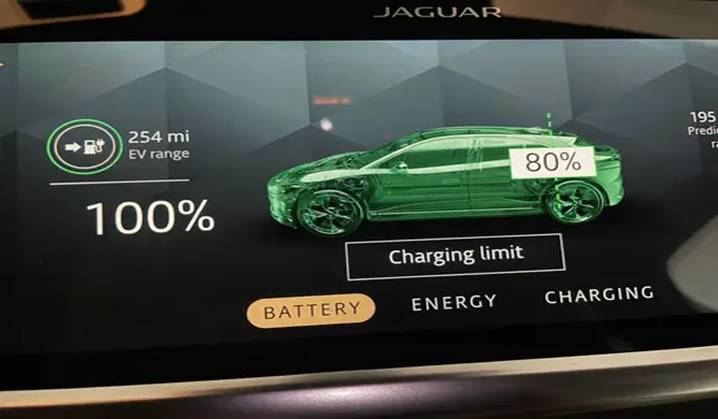
A close-up of a car’s infotainment screen showing a charging limit set to 80%.
Financial assistance (OZEV Grants)
The government provides some financial support for installation via OZEV (formerly OLEV).
Latest OZEV grant information
Starting from 1st April 2026, the UK government is significantly updating the Office for Zero Emission Vehicles (OZEV) grant landscape. The most notable change is a 40% increase in the standard grant amount for most applicants.
The primary goal of these changes is to reduce the upfront cost of home and workplace charging, covering almost half the cost of a typical installation.
For the majority of eligible applicants, the maximum grant per socket is increasing to help keep pace with installation costs.
| Applicant Type | Current Grant | New Grant (from 1st April 2026) |
| Renters & Flat Owners | £350 | £500 |
| Residential Landlord Chargepoint Grant | £350 | £500 |
| Households with On-Street Parking | £350 | £500 |
| Workplace Charging Scheme (WCS) | £350 | £500 |
| WCS for state-funded education institutions | £2,500 | – £2,000 (reduced) |
The maximum grant rate for these schemes will increase from £350 to £500 per socket. Residents and landlords applying from 1 April 2026 will be eligible for up to £500 per socket.
The maximum grant rate for the WCS will increase from £350 to £500 per socket.
Businesses and other workplaces will be eligible for up to £500 per socket for installations completed from 1 April 2026, regardless of when they applied for a grant.
The maximum grant rate for the WCS grant for state-funded education institutions will decrease from £2,500 to £2,000 per socket.
Education institutions applying from 1 April 2026 will be eligible for up to £2,000 per socket. Applications before 1 April 2026 will remain eligible for £2,500 per socket if vouchers are redeemed before 30 September 2026.
OZEV is consolidating eight schemes down to five to simplify the system. The following grants will close on 31st March 2026:
When the new service opens on 1 April 2026, there will be some changes to the way the flats and renters grant and residential landlord grant are applied for, claimed and processed. This will mean that:
Transition: The old portal closes to new applications on 31st March. If you apply before April but don’t finish the installation, you can reapply via the new system to benefit from the higher £500 rate.
Timescales for assessing applications and claims
Initially, we estimate that it will take up to 10 working days to assess applications and claims submitted on Find a Grant.
At Ocunio Energy, our electricians are OZEV-approved, so we can take away the hard work from you and apply for a grant on your behalf.