What the latest Rightmove and Zoopla data tells us about charging, property value, and turning a charge point into income.
Not long ago, an EV charge point was a curiosity on a property listing. Today it’s fast becoming something buyers and tenants look for by name — and the property portals have noticed. Whether you own your home, let it out, or manage a commercial site, a well-chosen charge point is now one of the more sensible upgrades you can make. Here’s what the data says, and how the right setup can actually earn its keep.
The clearest signal comes from the two biggest UK property platforms. Rightmove found that the number of homes listed for sale mentioning an electric car charging point jumped more than five-fold in a single year, and predicted charging would keep climbing buyers’ priority lists. Demand has only grown since.
Zoopla has gone a step further. In 2025, it became the first major UK portal to add a dedicated EV charging search filter — letting house-hunters screen for homes with a fitted or pre-wired charger, a suitable driveway, or nearby public charging. The fact that a portal built a filter for it tells you charging is now a mainstream search criterion, not a niche one.
The research behind that launch is striking: 40% of UK drivers say proximity to charging will influence where they move next, and a third say poor charging access would put them off a property altogether — rising to 84% among drivers who already own an EV. For landlords and sellers, that’s a sizeable slice of the market you can either win or lose on this one feature.
| The opportunity hiding in plain sight. Zoopla’s own analysis found only around 1.6% of listings explicitly mention EV charging. If your property has it and you say so clearly, you stand out from almost everyone else on the market. |
Putting an exact figure on it is tricky, and reputable sources are careful to say so. The most widely cited estimate, referenced by Zoopla, comes from the National Association of Property Buyers: a home charge point could add up to £5,000 to a property’s value, against a typical installed cost of around £1,000. Even treating that as a ceiling rather than a promise, the economics are attractive — particularly once a grant reduces the upfront cost.
For landlords, the case is less about resale and more about lettability: a charge point widens your pool of prospective tenants, supports a higher rent, and helps reduce void periods when EV-driving tenants are actively filtering for it. For commercial sites, charging strengthens lease appeal and feeds into green building credentials.

Person using a property search app to filter homes with EV charging
Here’s the part many property owners miss. A modern, networked charge point isn’t just an amenity — it can be a small revenue stream. With the right management software you can charge users a fair price per session, recover your electricity costs, and keep full visibility of who used what.
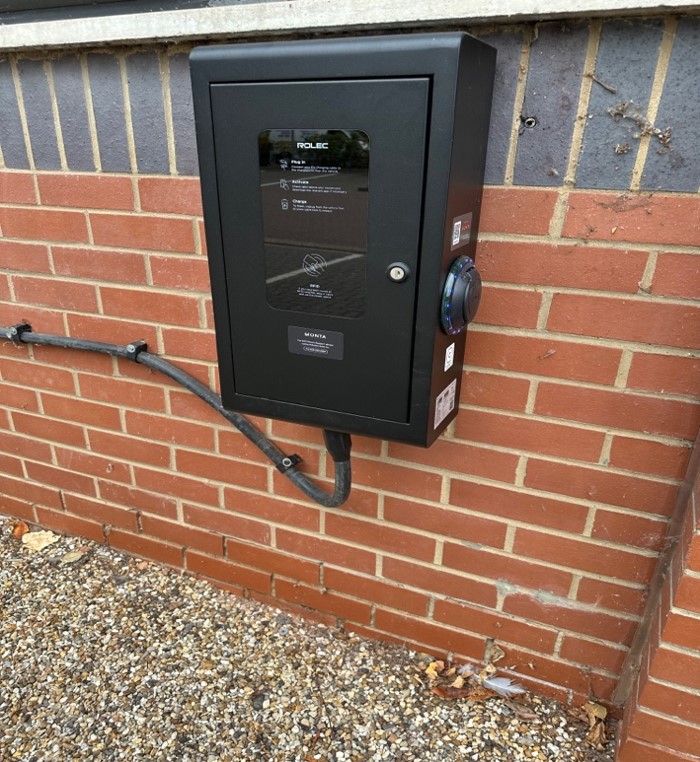
This is where an app-based platform like Monta comes in. Monta is an EV charging software platform that sits on top of your hardware and handles the things that turn a charger into a manageable asset: setting prices, taking payment, and reporting on usage. A few features that matter for property owners:
| A simple worked example. Say you’re a landlord with a charge point at a let property. You connect it to the Monta app and set a per-kWh price a few pence above your tariff. Your tenant taps to start a charge, pays automatically, and you see every session and your margin in one dashboard — no chasing, no spreadsheets. The charger covers its own running costs and chips away at the install cost, while making the property more attractive to the next tenant. |
Whatever your situation, there’s likely a grant that cuts the upfront cost by up to 75%. Businesses, charities and public-sector organisations can use the Workplace Charging Scheme (£500 per socket, up to 40 sockets and £20,000 per business). Private residential landlords can claim through the Residential Landlord Chargepoint Grant (£500 per socket, up to 200 sockets a year). Both schemes run until 31 March 2027. We break down the eligibility and application steps down in full in our dedicated OZEV grants guide.
The picture from Rightmove and Zoopla is consistent: charging is moving from nice-to-have to expected, it supports property value, and it can be set up to pay for itself over time. The buildings that get ahead of this will be the easier ones to sell, let and lease.
As an OZEV-approved installer, Ocunio Energy handles the whole journey: a free site survey, the right hardware for your property, software setup with platforms like Monta, the grant paperwork, and a clean certified installation.
| Ready to add charging — and make it work for you? Book a free, no-obligation site survey at ocunioenergy.com and we’ll map out your options, including every grant you qualify for and how to turn your charger into an income stream. |